
Upanayana patrike in Kannada (ಉಪನಯನ ಆಹ್ವಾನ ಪತ್ರಿಕೆ)
The wording of printed upanayana cards, with the Shaka year, samvatsara, tithi and lagna worked out for your muhurat and town.
Free forever: the image for WhatsApp and the PDF for printing, with a small purohit.app line at the foot. To remove the line, pay a small fee of ₹10: it helps us keep Purohit.app running.
1. Card language
The Kannada and Marathi wording follows real printed upanayana cards. Ask your purohit to check the date line before you print.
2. Choose a design
3. Who is inviting?
Most upanayana cards speak as the grandparents, with the boy's parents named beside him. The wording changes to match.
4. Fill the details
The boy
This is the title of the card and the word used in its sentences.
We write ಚಿ॥ before it.
Printed under the title in a gold ring. Choose it from your gallery.
The photo stays on this phone. It is never uploaded.
Parents and grandparents
Just the name. The card adds Mrs. / Smt. itself.
Printed after the father's and grandfather's names.
Date and muhurat
Enter the date, the muhurat time and the town: we work out the date line for you.
The time your purohit gave.
Kannada cards print the window: "10:30 ರಿಂದ 11:15 ರೊಳಗೆ".
Not printed. The panchang uses this town, not where you live: a Tirupati mundan uses Tirupati.
Filled with the date line.
Printed in the programme; relatives come for it.
A small line under the name. Leave it empty to keep it off the card.
Venue and programme
Functions print in date and time order.
Top and bottom of the card
Clear it if you want no line at the top.
Printed as "॥ ಶ್ರೀ ... ಪ್ರಸನ್ನ ॥".
Leave it empty to sign with the names above. Add uncles, aunts or children here.
Anything else to print at the foot of the card, as you want it to read.
More options
What goes on the card
A Kannada upanayana patrike opens with "॥ ಶ್ರೀ ಗಣೇಶಾಯ ನಮಃ ॥" and often the family deity as "॥ ಶ್ರೀ ... ಪ್ರಸನ್ನ ॥". The grandparents usually speak - "ಶ್ರೀಮತಿ ... ಮತ್ತು ಶ್ರೀ ... ನಾವುಗಳು ಮಾಡುವ ವಿಜ್ಞಾಪನೆಗಳು" - and give the date the traditional way: "ಸ್ವಸ್ತಿ ಶ್ರೀ ಶಾಲಿವಾಹನ ಶಕೆ ...ನೇ ... ನಾಮ ಸಂವತ್ಸರದ ... ದಿನಾಂಕ ... ನೇ ... ಬೆಳಿಗ್ಗೆ ಘಂಟೆ ... ರಿಂದ ... ರೊಳಗೆ ಸಲ್ಲುವ ಶುಭ ... ಲಗ್ನದಲ್ಲಿ".
The boy is "ನಮ್ಮ ಮೊಮ್ಮಗ ಚಿ॥ ...", with his parents in brackets ("... ಇವರ ಪ್ರಥಮ ಪುತ್ರ"), and the card asks guests to come, bless the vatu and accept the family's hospitality. It closes with "ತಮ್ಮ ಆಗಮನಾಭಿಲಾಷಿಗಳು" over the names of the elders. The rite may be called ಉಪನಯನ, ಜನಿವಾರ, ಮುಂಜಿ or ಬ್ರಹ್ಮೋಪದೇಶ; the maker uses the name you choose.
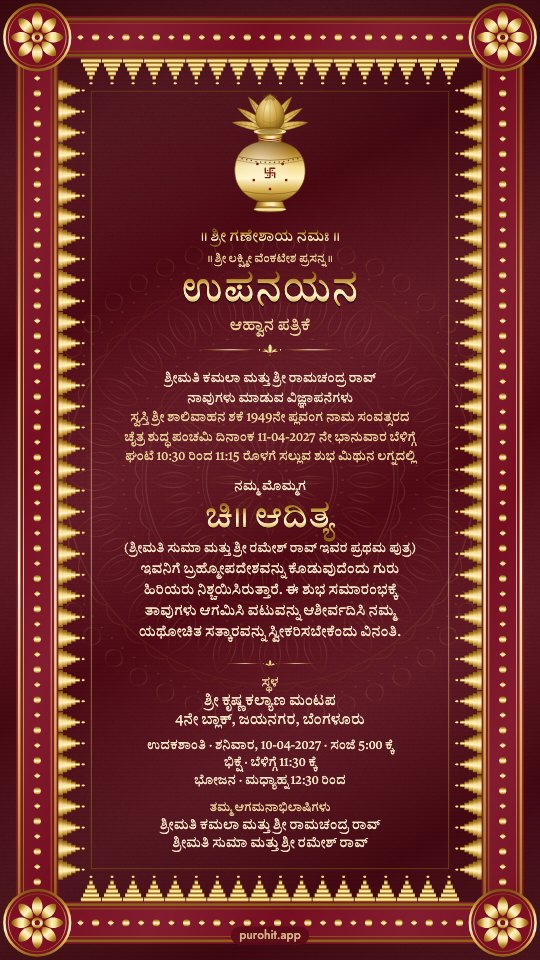
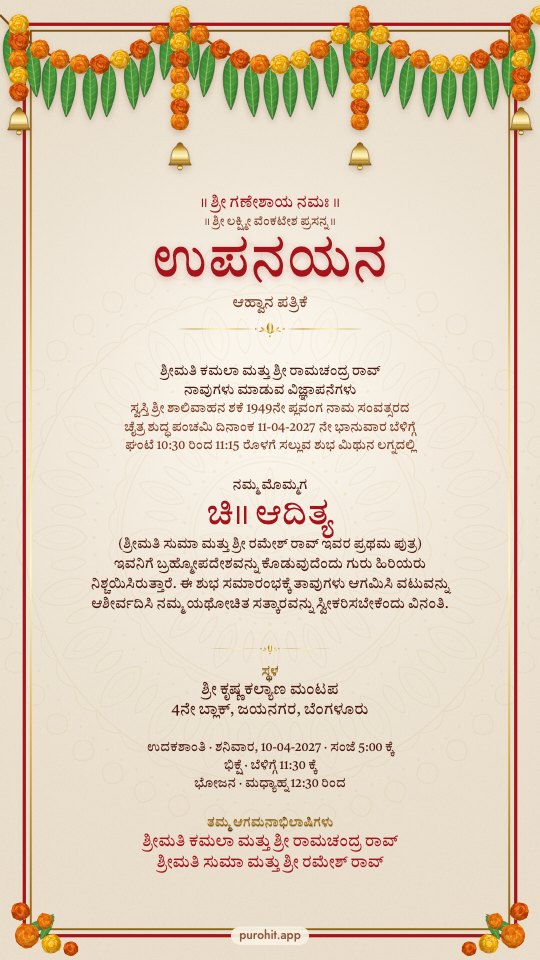
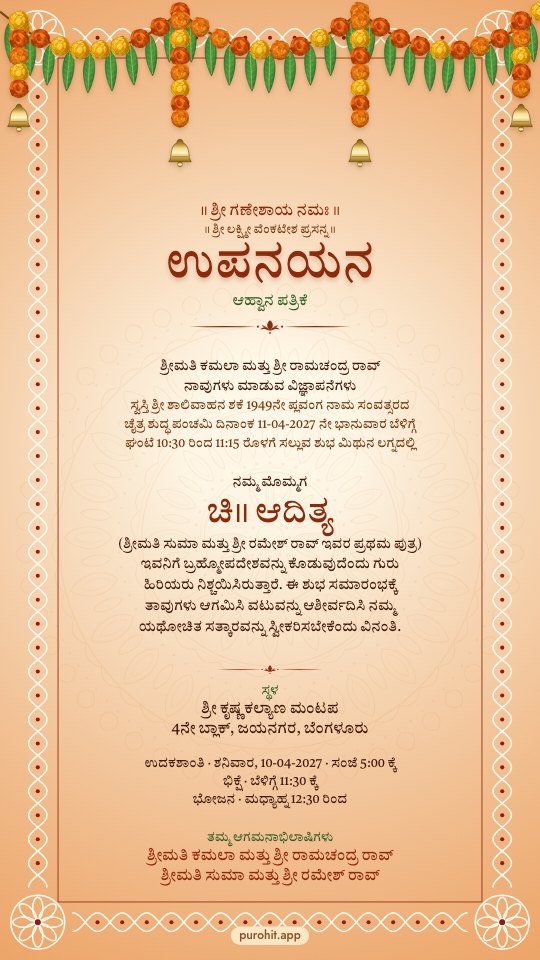
An example, as the maker writes it
॥ ಶ್ರೀ ಗಣೇಶಾಯ ನಮಃ ॥
॥ ಶ್ರೀ ಲಕ್ಷ್ಮೀ ವೆಂಕಟೇಶ ಪ್ರಸನ್ನ ॥
ಉಪನಯನ
ಆಹ್ವಾನ ಪತ್ರಿಕೆ
ಶ್ರೀಮತಿ ಕಮಲಾ ಮತ್ತು ಶ್ರೀ ರಾಮಚಂದ್ರ ರಾವ್
ನಾವುಗಳು ಮಾಡುವ ವಿಜ್ಞಾಪನೆಗಳು
ಸ್ವಸ್ತಿ ಶ್ರೀ ಶಾಲಿವಾಹನ ಶಕೆ 1949ನೇ ಪ್ಲವಂಗ ನಾಮ ಸಂವತ್ಸರದ ಚೈತ್ರ ಶುದ್ಧ ಪಂಚಮಿ ದಿನಾಂಕ 11-04-2027 ನೇ ಭಾನುವಾರ ಬೆಳಿಗ್ಗೆ ಘಂಟೆ 10:30 ರಿಂದ 11:15 ರೊಳಗೆ ಸಲ್ಲುವ ಶುಭ ಮಿಥುನ ಲಗ್ನದಲ್ಲಿ
ನಮ್ಮ ಮೊಮ್ಮಗ
ಚಿ॥ ಆದಿತ್ಯ
(ಶ್ರೀಮತಿ ಸುಮಾ ಮತ್ತು ಶ್ರೀ ರಮೇಶ್ ರಾವ್ ಇವರ ಪ್ರಥಮ ಪುತ್ರ)
ಇವನಿಗೆ ಬ್ರಹ್ಮೋಪದೇಶವನ್ನು ಕೊಡುವುದೆಂದು ಗುರು ಹಿರಿಯರು ನಿಶ್ಚಯಿಸಿರುತ್ತಾರೆ. ಈ ಶುಭ ಸಮಾರಂಭಕ್ಕೆ ತಾವುಗಳು ಆಗಮಿಸಿ ವಟುವನ್ನು ಆಶೀರ್ವದಿಸಿ ನಮ್ಮ ಯಥೋಚಿತ ಸತ್ಕಾರವನ್ನು ಸ್ವೀಕರಿಸಬೇಕೆಂದು ವಿನಂತಿ.
ಸ್ಥಳ
ಶ್ರೀ ಕೃಷ್ಣ ಕಲ್ಯಾಣ ಮಂಟಪ
4ನೇ ಬ್ಲಾಕ್, ಜಯನಗರ, ಬೆಂಗಳೂರು
ಉದಕಶಾಂತಿ · ಶನಿವಾರ, 10-04-2027 · ಸಂಜೆ 5:00 ಕ್ಕೆ
ಭಿಕ್ಷೆ · ಬೆಳಿಗ್ಗೆ 11:30 ಕ್ಕೆ
ಭೋಜನ · ಮಧ್ಯಾಹ್ನ 12:30 ರಿಂದ
ತಮ್ಮ ಆಗಮನಾಭಿಲಾಷಿಗಳು
ಶ್ರೀಮತಿ ಕಮಲಾ ಮತ್ತು ಶ್ರೀ ರಾಮಚಂದ್ರ ರಾವ್
ಶ್ರೀಮತಿ ಸುಮಾ ಮತ್ತು ಶ್ರೀ ರಮೇಶ್ ರಾವ್
Questions people ask
What is written on an upanayanam invitation card?
In the order printed cards use: a line to Ganesha and often the family deity, the name of the rite (ಉಪನಯನ, व्रतबंध, Upanayanam), the date line with the month, paksha and tithi (a Kannada card, and an English card for a city in the south or west, also carry the samvatsara and the lagna of the muhurat), the muhurat, the boy's name with ಚಿ॥ or चि., whose son and grandson he is, a request to come and bless the vatu, the bhiksha and meal times, the venue, and the names of the elders who invite. The maker writes all of this for you. The names, the date line, the programme and the lines at the top and bottom are yours to change.
How do you work out the samvatsara, tithi and lagna line, and what if my purohit wrote it differently?
From your muhurat date, time and town, in the form each language's cards use: the month, paksha and tithi at the muhurat on every card; on a Kannada card the samvatsara and Shaka year and the lagna rising at that time in that town; the Shaka year on a Marathi card and the samvat on a Hindi one; and on an English card for a city in the south or west, the samvatsara, the nakshatra and the lagna. We test these calculations against published panchangs. Some purohits write the tithi of that morning's sunrise rather than the tithi at the muhurat, or name the lagna that begins just after your time; the maker points these cases out when they apply. Your purohit's note is final: change any word of the line.
Should the card print the gotra and the bhiksha time?
Many cards print the bhiksha time, because relatives come for the bhiksha; the maker puts it in the programme. The gotra is the family's choice: fill it in and it prints as a small line under the boy's name, or leave it empty and it stays off the card.
Can one card invite for two brothers?
Yes, one card. On the English card, add the second brother and the sentences turn plural ("their beloved grandsons"). The Kannada, Marathi and Hindi sentences for two boys are with a native reader first; until they are checked, make one card per boy in those languages.
At what age is upanayanam done?
Classically at seven or eight, or an odd age after that, and many hold it just before the boy's wedding. The muhurat is fixed from his horoscope by your purohit; our upanayanam guide explains the customs.
What does it cost, and can I change it later?
Nothing: making the card and downloading the WhatsApp image and the print PDF are always free, with no sign-up. The card carries a small purohit.app line at the foot; removing it is a small fee of ₹10, paid once for this card by UPI, card or netbanking, which helps us keep Purohit.app running.