Seemantham, Valaikappu & Godh Bharai Invitation Wording
A seemantham or baby shower invitation names the mother-to-be through her husband, says who is holding the function, gives the puja's muhurat and a separate time for the ladies' bangle or lap-filling ceremony, and never says whether the baby is a boy or a girl. Every sample uses Sunday 14 March 2027 only to show how a date is written; your purohit fixes the day.
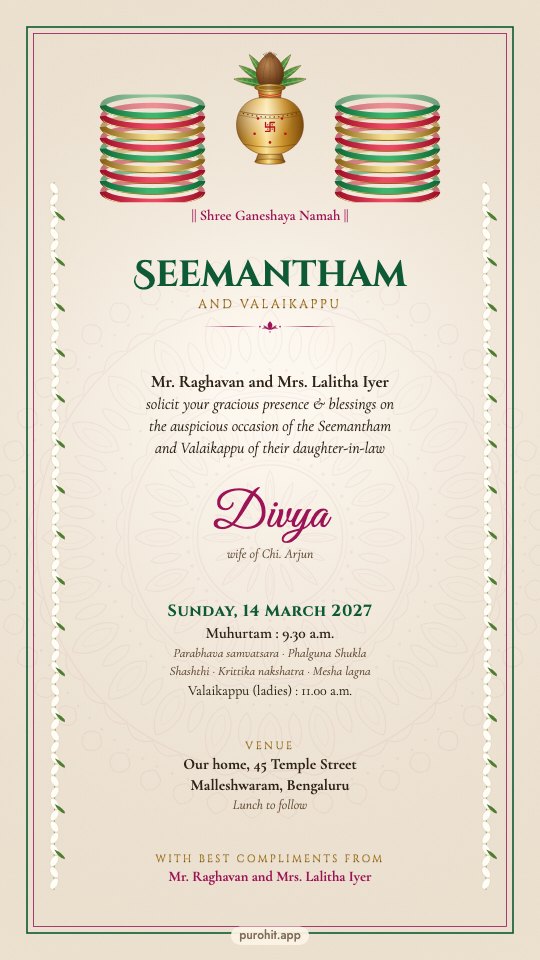
Seemantham and valaikappu invitation in English
From her husband's parents
|| Shree Ganeshaya Namah ||
Seemantham
and Valaikappu
Mr. Raghavan and Mrs. Lalitha
solicit your gracious presence & blessings on the auspicious occasion of the Seemantham and Valaikappu of their daughter-in-law
Divya
wife of Chi. Arjun
Sunday, 14 March 2027
Muhurtam : 11.00 a.m.
Parabhava samvatsara · Phalguna Shukla Shashthi · Rohini nakshatra · Vrishabha lagna
Valaikappu (ladies) : 12.00 p.m.
Venue
Our home, 45 Temple Street, Malleshwaram, Bengaluru
Lunch to follow
With best compliments from
[names of relatives]
Make this card with your names and date.
Keep the ladies' row apart from the muhurtam: the muhurtam is the moment the purohit fixed for the puja, the bangle ceremony a time for the married women to gather, and a guest coming for one of them needs to know which time is hers.
From her parents: godh bharai
|| Shree Ganeshaya Namah ||
Godh Bharai
Mr. Suresh and Mrs. Anita
solicit your gracious presence & blessings on the auspicious occasion of the Godh Bharai of their daughter
Pooja
wife of Mr. Karan
Sunday, 14 March 2027
Muhurtam : 11.00 a.m.
Phalguna Shukla Shashthi · Vikram Samvat 2083
Venue
[house or hall, area], New Delhi
Lunch to follow
With best compliments from
[names of relatives]
North Indian cards give the date line in this short form, the month and tithi with the Vikram Samvat year; South Indian cards add the samvatsara, the nakshatra and the lagna, as in the first card. If no purohit is coming and there is no muhurat, leave the date line off and give the time as a programme row: "Godh bharai : 4.00 p.m.". The same card does for a dohale jevan or a shaad: change the title and the name inside the sentence.
From the couple: baby shower
Baby Shower
Sneha
&
Rohan
solicit your gracious presence & blessings on the auspicious occasion of their Baby Shower
Sunday, 14 March 2027
Lunch : 12.30 p.m.
Venue
[flat or house number, building, area], Pune
A couple who want a lighter line can write "Sneha and Rohan invite you to celebrate with us as we wait for our little one", with the rest unchanged, and keep the invocation at the top if they like.
Godh bharai invitation in Hindi
।। श्री गणेशाय नमः ।।
गोद भराई
मान्यवर,
परमेश्वर की असीम अनुकम्पा एवं पूर्वजों के आशीर्वाद से हमारी पुत्रवधू
सौ. पूजा
(धर्मपत्नी - चि. करण)
की गोद भराई शुभ मिती फाल्गुन शुक्ल षष्ठी, संवत् 2083, रविवार, दिनांक 14.03.2027 को प्रातः 11 बजे सुसम्पन्न होगी।
अतः आपसे सानुरोध निवेदन है कि इस मांगलिक अवसर पर सपरिवार पधारकर सौ. पूजा को शुभाशीर्वाद प्रदान कर हमें अनुगृहीत करें।
मांगलिक कार्यक्रम
पूजन : प्रातः 10 बजे
गोद भराई : प्रातः 11 बजे
प्रीतिभोज : दोपहर 1 बजे से आपके आगमन तक
स्थान
हमारा निवास
बी-32, लाजपत नगर, नई दिल्ली
विनीत
श्रीमती सुनीता एवं श्री राजेश जी
Make this card with your names and date.
This is the card from her husband's parents, with the date line for 11 am in New Delhi. They call her हमारी पुत्रवधू, our daughter-in-law; when her parents invite it is हमारी सुपुत्री, with her husband still named in the bracket. सौ. (saubhagyavati) goes before her name. Her husband is चि. करण to his own parents; to hers he is their son-in-law, श्री करण जी. A family that holds the samskara with a purohit can title it सीमंत संस्कार, and the sentence then reads का सीमंत संस्कार ... सुसम्पन्न होगा।
Seemantham invitation in Telugu
॥ ఓం శ్రీ గణేశాయ నమః ॥
సీమంతం
ఆహ్వానం
స్వస్తిశ్రీ చాంద్రమాన శ్రీ పరాభవ నామ సంవత్సర ఫాల్గుణ శుద్ధ షష్ఠి అనగా తేదీ 14-03-2027 న ఆదివారం ఉదయం గం॥ 11:00 ని॥లకు రోహిణి నక్షత్రయుక్త వృషభ లగ్నమందు సుముహూర్తమున
మా కోడలు
చి॥ సౌ॥ దివ్యకు
(చి॥ అర్జున్ ధర్మపత్ని)
సీమంతము జరిపించుటకు పెద్దలు నిశ్చయించినారు.
కావున తామెల్లరు సకుటుంబ సపరివారముగా విచ్చేసి చి॥ సౌ॥ దివ్యను ఆశీర్వదించి మమ్ములను ఆనందింపజేయ ప్రార్థన.
వేదిక
మా స్వగృహం
[address], హైదరాబాద్
విందు · మధ్యాహ్నం గం॥ 12:30 నుండి
ఆహ్వానించువారు
శ్రీ రాఘవ, శ్రీమతి లలిత
బంధుమిత్రుల అభినందనలతో
Make the Telugu card with your names and date.
The first line is the muhurat as Telugu cards give it, for 11:00 am in Hyderabad. Then the card names her ("our daughter-in-law, Chi. Sow. Divya, wife of Chi. Arjun"), says the elders have fixed her seemantham, and asks guests to come with their whole family and bless her. When her parents invite, మా కోడలు becomes మా కుమార్తె, our daughter. Many Telugu homes call the day శ్రీమంతం: then the title is శ్రీమంతం and the sentence says శ్రీమంతము జరిపించుటకు. The shortest Telugu form puts her name in the title, దివ్య సీమంతం ఆహ్వానం, and keeps only the date, the request (తామెల్లరు సకుటుంబ సపరివారముగా విచ్చేసి మమ్ములను ఆశీర్వదించి ఆనందింపజేయ ప్రార్థన, please come with all your family, bless us and make us happy) and వేదిక: మా స్వగృహమునందు, at our home. Have an elder read the Telugu before you print, and show the date line to your purohit.
Valaikappu invitation in Tamil
உ
வளைகாப்பு விழா
அழைப்பிதழ்
அன்புடையீர், வணக்கம்.
நிகழும் மங்களகரமான பராபவ வருடம் மாசி மாதம் 30ஆம் தேதி (14.03.2027) ஞாயிற்றுக்கிழமை, வளர்பிறை சஷ்டி திதி, ரோகிணி நட்சத்திரம் கூடிய சுபதினத்தில் காலை 10.30 மணிக்கு மேல் 11.30 மணிக்குள் ரிஷப லக்னத்தில்
எங்கள் மகன் அர்ஜுனின் துணைவியும் எங்களது மருமகளுமான
சௌபாக்கியவதி திவ்யாவிற்கு
வளைகாப்பு விழா நடைபெற உள்ளதால், தாங்கள் தங்கள் குடும்ப சகிதம் வருகை தந்து ஆசீர்வதிக்கும்படி அன்புடன் அழைக்கின்றோம்.
இடம்
ஸ்ரீ லட்சுமி திருமண மண்டபம்
அண்ணா நகர், சென்னை
மதிய விருந்து · மதியம் 12 மணி முதல்
தங்கள் நல்வரவை விரும்பும்
ராகவன் - லலிதா
Make the Tamil card with your names and date.
In order: the greeting (dear ones, greetings), the date line, who she is ("the wife of our son Arjun and our daughter-in-law, Sowbhagyavathi Divya"), the request (as her valaikappu is to be held, please come with your family and bless her), the venue under இடம், the lunch, and the names, husband first with a hyphen, the way Tamil family cards sign. When her parents invite, the line before her name becomes திரு. அர்ஜுன் அவர்களின் துணைவியும் எங்களது மகளுமான, the wife of Mr Arjun and our daughter. For a card from the couple: எங்கள் இல்ல வளைகாப்பு விழாவில் கலந்துகொள்ள உங்களை அன்புடன் அழைக்கிறோம், we warmly invite you to the valaikappu at our home. Have an elder read the Tamil before you print.
A shorter Tamil card
Many Tamil family cards are shorter, with no panchang date line, only the day and the time the function starts. That suits a valaikappu held without a puja.
வளைகாப்பு விழா அழைப்பிதழ்
திரு. அர்ஜுன் அவர்களின் துணைவி திருமதி. திவ்யா
சீமந்தம் (வளைகாப்பு) விழாவிற்கு, தாங்கள் தங்கள் குடும்பத்துடன் வருகை தந்து ஆசீர்வதிக்கும்படி அன்புடன் அழைக்கின்றோம்.
இடம்: [hall and address]
நாள்: 14.03.2027, ஞாயிற்றுக்கிழமை
நேரம்: காலை 10.30 மணி முதல்
What goes on the card
- A line to Ganesha or your family deity (உ at the head of a Tamil card).
- The title, in the name your home uses (below).
- Who invites, with one sentence asking guests to come and bless her.
- Her name, and her husband's.
- The date and the muhurat of the puja, with the traditional date line if you want it.
- The programme, one row per part of the day with its time: Seemantham puja, Valaikappu (ladies), Godh bharai, Lunch (విందు in Telugu, மதிய விருந்து in Tamil).
- The venue, very often "our home".
- The names at the end, under "With best compliments from" in English, ఆహ్వానించువారు (those inviting) in Telugu and தங்கள் நல்வரவை விரும்பும் (who hope for your coming) in Tamil.
The name of the day
It is one observance with many regional names; use yours, both as the title and inside the sentence. Our seemantham and godh bharai guide covers what happens on the day.
- Seemantham: the South Indian name, from the Sanskrit simantonnayana, "the parting of the hair" (seemantha in Kannada homes, srimantham in many Telugu ones). A purohit conducts it, so the card carries a muhurat; many homes hold it with the pumsavana, as pumsavana-seemantham.
- Valaikappu: the Tamil bangle ceremony, in which married women (sumangalis) put glass bangles on her wrists. It is often held on the seemantham day, and Tamil cards then print the two together as சீமந்தம் (வளைகாப்பு).
- Godh bharai (गोद भराई, "filling the lap"): the North Indian name, usually led by the women of the house, often with no purohit.
- Dohale jevan (डोहाळे जेवण) in Marathi homes and shaad or sadh (সাধ) in Bengali ones, each built round a meal of the dishes she has been craving; simant or kholo bharvo in Gujarati homes.
- Baby shower: the plainest title for a card that goes to friends and colleagues as well as relatives.
Who invites, and how she is named
In many South Indian homes the seemantham is held by her husband's family; in many Tamil homes the valaikappu is hosted by her mother, after which she goes to her parents' home for the last weeks. Often each side holds a function of its own and sends its own card. Her husband's parents write "their daughter-in-law", her parents "their daughter" (still naming her husband under her name, as "Mr." rather than "Chi.": he is their son-in-law), and the couple put their own two names at the top, with no "wife of" line: the modern form, common on a card to friends.
In every language she is named through her husband: "wife of Chi. Arjun" in English ("Chi." is short for chiranjeevi, long-lived, the honorific cards put before a young man's name), திரு. ___ அவர்களின் துணைவி திருமதி. ___ (Mrs ___, wife of Mr ___) on Tamil family cards, and (చి॥ ___ ధర్మపత్ని), wife of Chi. ___, after her name on a Telugu card. Before her own name the Telugu card writes చి॥ సౌ॥ (chiranjeevi saubhagyavati, Chi. Sow.) and fuller Tamil cards சௌபாக்கியவதி: saubhagyavati is a married woman whose husband is living. The English cards print her name alone.
The date line
Each sample prints the line for its own muhurat: the in-laws' card for 11:00 am in Bengaluru, the godh bharai card in the short North Indian form for New Delhi. The Telugu స్వస్తిశ్రీ ... సుముహూర్తమున sentence holds the weekday, the clock time and the lagna, and the Tamil நிகழும் ... லக்னத்தில் sentence the Tamil month and day: 14 March 2027 is Maasi 30. Three things to get right:
- It belongs to the muhurat, not to the whole day. On 14 March 2027 Krittika nakshatra ends at 10:24 am, so the 11:00 am muhurat above prints Rohini, while a 9:30 am one would print Krittika; Shashthi tithi ends at 12:32 pm, so a godh bharai at 1:00 pm in New Delhi would print Saptami. Print the line for the puja's muhurat, never for the lunch.
- The Tamil month turns with the sun. The day after the sample, Monday 15 March, is already Panguni 1, so if the date moves, change both halves of the line.
- The year name changes in April. The Telugu samvatsara turns at Ugadi, on 7 April in 2027, and the Tamil year at Chithirai 1, on 14 April, so for one week a Telugu card reads Plavanga while a Tamil card still reads பராபவ. A line copied from a card printed before the turn names the wrong year.
Show the line to your purohit before you print. What a muhurat is explains how the moment is chosen, and our panchang shows the tithi and nakshatra for your city on any day.
What never goes on the card
- Whether the baby is a boy or a girl. Finding out or revealing the sex before birth is illegal in India under the PCPNDT Act, 1994, and a card should not hint at it either way: no "boy or girl?" line and no pink-or-blue colour scheme.
- The month of pregnancy, unless your family wants it. The ceremony's name already tells guests what the day is, and a card is forwarded well beyond the people it was sent to.
A WhatsApp message to send with the card
Namaste! With the blessings of our elders, we are holding Divya's seemantham and valaikappu at our home in Malleshwaram on Sunday, 14 March 2027: the puja at 11.00 a.m., the bangle ceremony for the ladies at 12 noon, and lunch after. Please come and bless her. The card is attached, and the location follows.
Raghavan and Lalitha
And the day before:
Tomorrow is Divya's seemantham, with the puja at 11.00 a.m. and the valaikappu at 12 noon. The location is below. We look forward to seeing you.
Send the map link as its own message, so guests can tap it.
Making the card
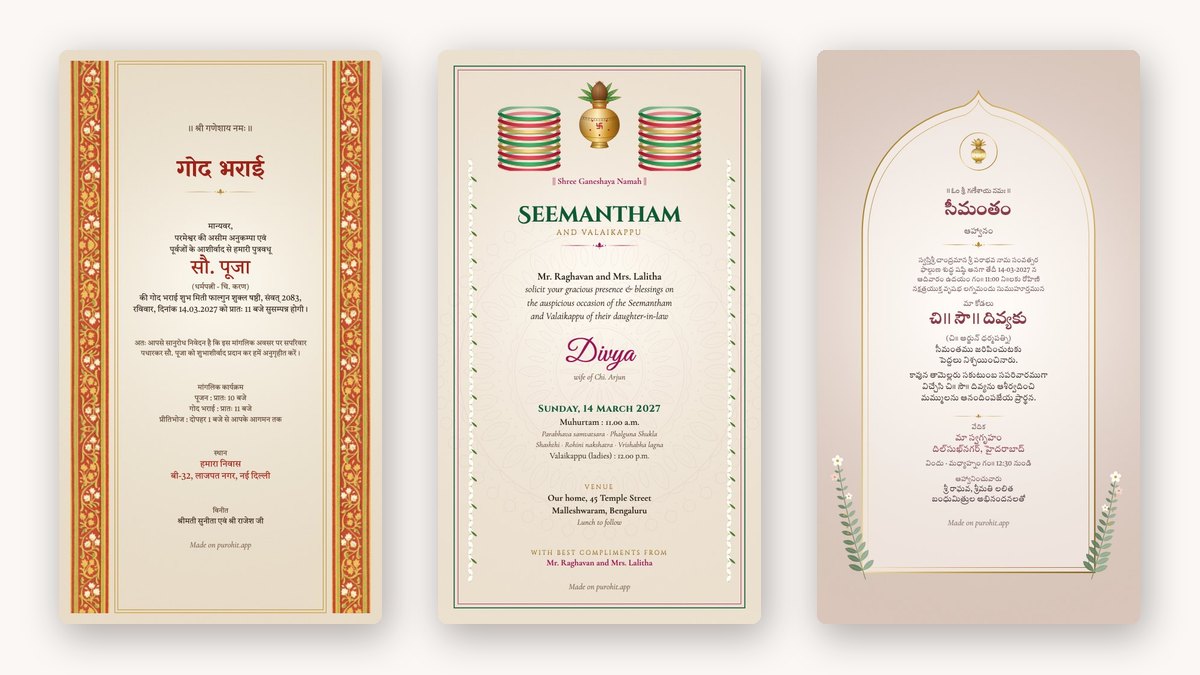
The baby shower invitation maker writes the English cards above: you choose the title, from Seemantham and Valaikappu to Godh Bharai, Dohale Jevan or Baby Shower, and who is inviting, and it writes "their daughter-in-law" or "their daughter" and the "wife of" line to match, with the ladies' function and the meal as programme rows. Give it the date, the muhurat time and the city and it adds the date line for your city; it never prints the month of pregnancy, and its designs carry no pink-or-blue cue. The Hindi godh bharai card, the Telugu seemantham card, titled సీమంతం or శ్రీమంతం, and the Tamil valaikappu card follow the Hindi, Telugu and Tamil cards above.
When the baby arrives, the naming ceremony comes next. If you want a purohit for the seemantham puja itself, you can request a purohit for the seemantham.
How we verify: dates and muhurat timings in our guides are cross-checked against the panchang before publishing, and practical details - samagri, durations, dakshina ranges - reflect real bookings on Purohit.app. Traditions vary by community; your purohit's guidance prevails.